'The reason you can't get democratic leaders to join [the democracy uprising] is because they agree' [that unions should be busted]. 'Right in the middle of the Madison affair, the CEO of Goldman Sacs, Lloyd Blankfein, got a $12.5 million bonus and his base pay was more than tripled.'
'It was heartening to see that there are tens of thousands protesting in Madison... That's the beginning, maybe, of what we really need here, a democracy uprising. Democracy has almost been eviscerated.'
The next election is going to break all campaign spending records at over $2 billion for Barack 'Bipartisan Compromise' Obama's campaign, the man's whose 2008 campaign was overwhelmingly funded by (big surprise) Wall Street.
Wisconsin Budget Repair Bill Protest from Matt Wisniewski on Vimeo.
Matt Wisniewski, a 22-year-old college student at the University of Wisconsin, put together this inspiring video in support of unions in Wisconsin. The video consists of three days of footage of the 30,000 protesters at the state capitol in Madison against a bill that would drastically curb the bargaining power of public employees in unions. The accompanying song is Arcade Fire’s “Rebellion (Lies).”
Today President Obama released a statement to the press that the U.S. will do all it can to support the orderly transition of Egypt to a [corporate oligarchy]. In a recent article in The American, Paul Wolfowitz states he sees a new transition figure emerging in Egypt; Dr. Hossam Badrawi, "a board member and strategic shareholder in Nile Badrawi Hospital, one of the largest hospitals in Cairo." Dr. Badrawi also "started the first healthcare management organizations (HMO) company in Egypt which is currently one of the largest HMOs in the private sector." And we all know how well HMOs work in America.
So it would appear that Egypt's current government run healthcare system, in which "nearly all Egyptians have access to healthcare," is a prime candidate for American style corporate wealthcare. America must stop that healthcare for all nonsense and get Egypt back to American values where we make sure at least 15% of the citizens of the country have no healthcare insurance, because they can't afford to pay for it. After all, how can we expect American based corporate healthcare industry to take a foothold in Egypt if they can't see at least 30% profit margins like they do in the US.
The 26th amendment (granting the right to vote for 18 year-olds) took only 3 months & 8 days to be ratified! Why? Simple! The people demanded it. That was in 1971...before computers, before e-mail, before cell phones, etc.
Of the 27 amendments to the Constitution, seven (7) took 1 year or less to become the law of the land...all because of public pressure.
I'm asking each addressee to forward this email to a minimum of twenty people on their address list; in turn ask each of those to do likewise.
In three days, most people in The United States of America will have the message. This is one idea that really should be passed around.
Congressional Reform Act of 2011
1. Term Limits.
12 years only, one of the possible options below.. 1. Two Six-year Senate terms 2. Six Two-year House terms 3. One Six-year Senate term and three Two-Year House terms
2. No Tenure / No Pension.
A Congressman collects a salary while in office and receives no pay
when they are out of office.
3. Congress (past, present & future) participates in Social Security.
All funds in the Congressional retirement fund move to the Social Security system immediately. All future funds flow into the Social
Security system, and Congress participates with the American people.
4. Congress can purchase their own retirement plan, just as all Americans do.
5. Congress will no longer vote themselves a pay raise. Congressional pay will rise by the lower of CPI or 3%.
6. Congress loses their current health care system and participates in the same health care system as the American people.
7. Congress must equally abide by all laws they impose on the American people.
8. All contracts with past and present Congressmen are void effective 1/1/11.
The American people did not make this contract with Congressmen. Congressmen made all these contracts for themselves.
Serving in Congress is an honor, not a career. The Founding Fathers envisioned citizen legislators, so ours should serve their term(s),
then go home and back to work.
If each person contacts a minimum of twenty people then it will only take three days for most people (in the U.S. ) to receive the message.
I'm going to be giving you spoilers here. So if you haven't seen Restrepo, you might not want to read on. But if you have no intention of seeing it, or have seen it, or are sick of war movies, then this is for you.
First off, Restrepo is the name of a soldier who was killed in action. He was with the platoon of U.S soldiers chronicled in the film, Restrepo. As a reaction to his death, which devastated his comrades, they set up an outpost and named it after him, O.P. (outpost) Restrepo. Now I have complete respect for the men of this platoon and Sgt. Restrepo, in terms of their service to their country. But the problem is that their service is in vain and effectively useless.
Sgt. Restrepo's death, while being quite dramatic material for a film, was in vain. This is not to diminish his worthiness as an individual, a serviceman, comrade, and friend to the other men of his platoon. But therein lies the rub. Right wing warmongers exploit men like these and their plight (which they impose on them to begin with). This film is overflowing with camaraderie, buddy love, friendship, honor, glory, patriotism and all those heartwarming, good feelings we're supposed to have about our country. There is no better subtle propaganda tool than a film like Restrepo to prop up this useless futile extravagant waste of a war. We feel for these soldiers and what they have to go through. But why the fuck do they have to go through it in the first place? That question is never asked.
Now I am not faulting the filmmakers. I have plenty of respect for them and their bravery in risking their lives to make this film. After all, if they hadn't done so, I wouldn't be able to rant about it, and it is questionable that the film is a propaganda tool of the right. It only works that way if you're a fucking moron, like people who believe what they hear on Fox News, or don't have any mental capacity to read between the lines. Pretty much, that would include all the brain-dead right wing and other warmongers. The filmmakers have exposed a piece of this war not seen before in the right wing owned and operated biased media.
So perhaps the left (and people like me) can exploit this film as well. In that respect, it is quite an awesome film. The film actually covers the bombing of a civilian neighborhood, and we actually see wounded children. But that hardly exposes the real tragedy of the many thousands of civilian deaths and injuries that are neatly cleaned from any and every media account of the war. The filmmakers have a good cop out for this. They were covering the troops and what the troops go through, bleeding heart conservatives who sign up for war and then can't deal with it when they get shot or their buddy is killed. What did they think war was?
To balance out the reality of what war is, if you see Restrepo, you should also see the HBO documentary produced by James Gandolfini, Wartorn, a film about PTSD (Post Traumatic Stress - a nice name for being fucked for life up after seeing your buddy's head get blown off, or after watching a three year old take a hit of automatic weapons fire).
While I agree with the students here, I question what part of the PPACA (Affordable Care Act) will actually survive to do any good. We've already seen the provision that blocks rates to increase repealed. With rate increases already in effect (or taking effect 1/1/2011) insurance companies now have raised rates by as much as 39% to make up for having to put 26 year olds back on their parents plans (among other things).
Plus they have now made new restrictions on what meds and services are covered. It's business as usual in the suck Americans' health dry for profit game.
The cumulative effect is that PPACA has decreased health care and made things much worse. By 2014 it will require all Americans to buy insurance and submit to this mandated corporate oligarchy, giving Americans less coverage, with continued denial of care and pre-existing condition exclusions at higher costs, guaranteeing the corporate oligarchy a steady stream of government mandated corporate welfare to the insurance industry.
Repealed or not, that is exactly what will happen. The difference is that with repeal, people just might get pissed off enough to take to the streets and refuse to pay for health care insurance (and you can bet repeal will not reduce any rates), which amounts to corporate graft. It is naive to think that PPACA will have any positive effect. It is a 2000+ page monster health care legislation written by and for the corporate health insurance oligarchy that runs America. Read the Article at HuffingtonPost
Marc Sapir is a primary care physician in Alameda County, CA and graduate of the Stanford University School of Medicine, M.D. 1970. He has been traveling with the Mad as Hell Doctors on their 2010 California tour. He sent out the following account of his trip.
Dr. Sapir also appears eloquently in the upcoming release of my documentary film, "got healthcare yet?"
Berkeley, Nov 2, 2010 ~ The Mad as Hell Docs tour ended 3 weeks ago today and part IV of my 2010 CA travelogue is long gone. But I promised to find a little part III and here it comes bubbling up:
The MAHD 2010 California tour covered about 2,500 driving miles (though those intrepid Oregon guys—Paul, Mike, Phillip--drove well beyond 3,500 miles in the 18 days). In 2009 the first MAHD tour drove 6,000 miles through the “heartlands” on the way to D.C. Complementing this year’s 2,500 miles, MAHD played to a combined California audience of 2,500 folks, beginning and ending with large audiences (in Arcata—250-- and Chico--300). With the larger audiences the enthusiasm and Mad doc mirth became infectious. In the 18 days running there were, I believe, 28 events. Three or four of these were small group interactions and a slide show that Mike Huntington put together for med students. A few outdoor events—such as at Pasadena and San Diego--precluded showing of any video clips (no socialist plot to protect our homes from fires could be screened). About 22 events were the full bore program. No, not boring, I said “full bore,” at least according to this reporter’s perspective.
The MAHD moderator always asks himself out loud: “self, why are we preaching to the choir?” and gives the answer that “we’re trying to be sure the choir is well armed to make the case for Medicare for All/Single Payer, fully understands how weak the PPACA reform is and how badly the public option would have fared; to help people gain confidence to talk with neighbors, friends, and Uncle Joe (who is a Tea Bagger) at Thanksgiving”. And we’re there to motivate and excite people. That sounds right over here at my desk, but what a number of organizers of events have also reported is that they have actually recruited good numbers of new members to the local organizations from these events, including the smaller ones. Let’s hope the new members’ enthusiasm translates into a lot of activity for those organizations.
Pretty much at every MAHD event there were 2 local docs or a doc and a nurse on the stage as part of the panel (in a few cases there were 3 local health professionals on stage). Audiences particularly appreciated hearing from their own community people. That changes the typical U.S. medical equation of “docs at a distance”. Some of these local docs were true heroes which we learned about only as we heard of their life’s work. In some cases they had set up clinics for people without resources, or successfully gotten smoking removed from prisons and been able to promote health education, or done battle with local institutions to pressure them to provide more services for people who needed them most, and so forth. And in some places, like Chico, by the time we left the locals were already talking about launching their own local mini tours to various outlying communities, towns, cities. Do it, guys.
At USC the audience at the School of Social Work forgot to show up. Maybe that was because MAHD event was set up with only a few days notice and came during exam week (duh!). But we corralled several students coming to and from classes and study groups and held extended one on one or one on 3 discussions in front of the school with our banners splayed all over the place. The response was very positive (I guess that with the word “social” in their line of study they must be just another bunch of damned socialists like Barack Obama); MAHD promised the Rev. Dr. Peter Sabey (the host) not to worry but MAHD will be back, with better notice and collaboration next time.
Back home now, I’ve been wondering where this all leads to. If you heard my own 4 minute talk you may remember words to the effect of turning the Single Payer movement outward and re-creating a good old fashion civil rights movement, like in the 60s, to rejuvenate Martin King’s call to arms on health care. Mike mentions civil disobedience tactics. That is part of the broadening of vision, I think, but a social movement isn’t just about tactics. It’s about culture and strategy--seeing the Single Payer connection between politics and culture, between politics and class, between our goals and racism. I’m ready to get arrested more than once if would help achieve Medicare for all in the U.S. But I know there’s a big difference between symbolic civil disobedience and planning a movement that can use it to great effect. At the present moment I don’t believe that tactics are as important as figuring out how to merge our efforts with the rights struggles of undocumented immigrants, the unemployed workers, youths who are frequently gunned down unarmed by cops in Black urban communities and who gravitate toward gangs for self-preservation, people who are still being evicted and have no place to live, no way to survive, workers who would choose a union but have been denied the Employee right to choose act, and so on. That means first off figuring out how to join the struggles of people of a different class, by and large, and prove to them that their wellbeing is what our cause is about, not just when it comes to access to health care as a right. On the tour I talked with a few HCA/Single Payer chapter leaders who believe as I do and have already tried that kind of outreach, with somewhat mixed and marginal results. It ain’t easy. But what I think I detected from them is that we are usually working from the perspective of trying to get those reached out to “to join us” when it may be that the question is how do we learn how to join them, so that they can then join with us or how to create a broader context.
Since 1994 I have not forgotten that Proposition 186, the California Single Payer initiative campaign which failed dismally at the polls, was not led by people most effected by the lack of access to care. There were docs and union leaders and other mostly white middle class folks carrying out the campaign. And in the final analysis 186 was led by people who could not see the importance of standing firm on inclusion of all—including the undocumented—in their press statements. It was a campaign that did not reach out in any meaningful way to the Black, Latino and Philippino communities, churches, and other organizations. And as I reflect upon how we might move Medicare for All efforts in the right direction and center stage, I never cease believing that now, not later, is the right time to make the turn we could not make in 1994, the turn that King’s echoing words call out to us--to forge a multi-ethnic leadership by using the call to a new civil rights movement that can unite us on multiple rights demands and issues. Sure, doing that practically won’t be easy. But we can do this if we all agree that it’s something that must be done just as much as supporting any particular piece of legislation.
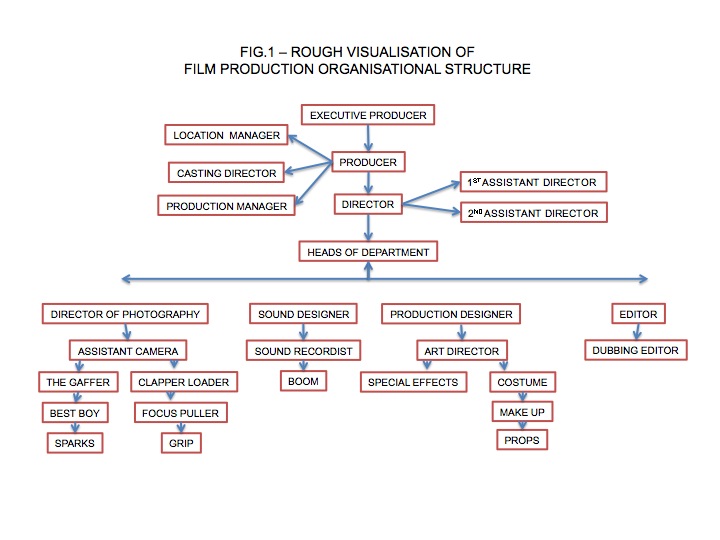
I read a very disturbing blog on the film industry a few days ago by James Fair (lecturer in Film Technology at Staffordshire University).The thing that made me sick was the site of a corporatist organizational chart. If you're anything like me, the site of these charts makes you want to puke (You may want to put your hand over it).
So here we have a film scholar (as if good filmmaking was ever a scholarly endeavor) telling us that business models are questionable in light of the artistic and creative aspects of filmmaking. Then he goes on to suggest there may be a better model out there, even though this one is working. But the current system isn't working. It never did work. The film industry is having one of its greatest depressions. Even when it was on top, 50% of all industry product never made a profit.
The problem is not that we need a better business model. The problem is that even having a conversation about a business model is absurd, which brings me to David Lynch. When I listen to him talk about the process of making a film, there is no business model or organizational structure. You may say even he has departments run by department heads, which may be true. But in a truly harmonious film production these departments operate as single entities to fulfill their respective tasks, and like our scholar mentions, none of this is ever set in stone.
The problem that 99% of the film industry continues to have is that film is not a business, nor is it purely an art. It's the business of making art, and that means that the art has to come before the business, since you can't sell your art if you don't go about making it first. This may depend on your definition of "art", which is an abstract word much like love. I think of art as stuff that moves people emotionally and even physically. That has absolutely nothing to do with making money in itself. If the moving of people can be achieved then I think the money making potential is there. You don't start out with the idea of having to make money and then come up with art that has that goal. That is not art. Nor should business have as its goal to make money without first having some higher purpose, to fill a need or fix a problem or help society.
Of course, failed American corporatism and its decades of authoritarian conservative ingrained tradition will continue to insist to its dying day that pure business models (regardless of product and with no other goal than money) are the way to go about doing any business, even art. But, like the Roman Empire, blind leading the blind (no one knows anything in Hollywood) kind of thinking is ultimate doom.
Pull out David Lynch's Inland Empire DVD. You do have one right? There, not only will you find David Lynch show you a great quinoa recipe (maybe you eat too much meat to be able to make good films that can sell on their own merit) but you'll also hear him talk about his artistic "business model", which amounts to getting one idea, then getting another idea, and eventually putting these ideas together. But if you were to talk to a good sample of great artists, you'd find that each of them have different ways of doing their art.
Even most indie filmmakers have a model where they come up with a script, and even a cast an crew, and sometimes even make the film before they go about looking for an "executive producer" (since often the only real business aspect of films is the distribution after they're made). They may or may not take notes from that producer. My understanding is that most indie producers act as patrons and seek to fund artists with no expectation of return. That is the traditional model of artistic endeavor around the world.
The one reason that any good films even exist in America, I think, is that there are indie renegades out their like David Lynch and there is also the independent spec screenwriter factor. Screenwriting can be done in a vacuum away from all the failed corporatist bullshit. So in that regard, screenwriters have the ability to be true artists, going about writing in whatever artistic way suits them (as George Lucas did far away from Hollywood). For that reason, we have some great screenplays in existence that Hollywood then gets it's greedy clammy little hands on and plugs into its organizational chart to end up with something resembling art (so long as no dogs are killed).
Another fallacy about the chart above, with the quintessential executive asshole at the top, is that there is no marketing department. Anyone and everyone knows that in the Hollywood studio system marketing is god. They only make films that project (as proven under failed corporatist business formulas) to make money. So we end up with trilogies and sequel after sequel riding on the success of previous success. We see film stories (like Inception) ripped off of other films (like The Matrix) that worked and we see a plethora of remakes that are again remade on a regular ten year schedule, just like regular old white men on Exlax.
I ran into Alexia's project, Adventures in Plymptoons ( a documentary on animator Bill Plympton), on IndieGoGo, where I was amused with her (and Bill's) total irreverence to anything conservatively morally straight. They have since launched a Kickstarter.com campaign to fund post production of the film. Check out Alexia's trailer:This was enough to get me to pony up $50 to help her out. We need more indie films like this and as an indie filmmaker I sincerely believe we should all help each other out. What goes around comes around. The bottom line being that if a couple thousand indie filmmakers help each other out that's enough of an audience right there to launch a film to success. There are easily a few thousand indie filmmakers out there. Something like 5000 to 6000 enter Sundance every year, not to mention thousands of other film festivals. Billions of dollars are spent every year on indie films and only a handful of them ever see the light of day, even when they're good. We have no one to blame but our collective selves.
Do you really like the crap coming out to the cineplex every week? Wouldn't you rather see indie films out there? Well do something about it. Put your money where your mouth is. Support indie filmmakers. Buy their films. Demand to see then on OpenIndie.com. Chip in a few bucks at Kickstarter or IndieGoGo. We can do this. It's a no brainer. Have you seen Ants? You know, that animation with Kevin Spacey as the bad ass grasshopper that controls hundreds of ants with his little gang, until they all realize they have him outnumbered and scare the shit out of him.
Well, we are the ants; we the indie filmmakers. The studios are the thug grasshoppers trying to control us. Why do we put up with their shit?
Alright, so anyway, I checked out Bill's booth at Comic Com, where Alexia was a guest, and interviewed her, just for kicks. Check it out.